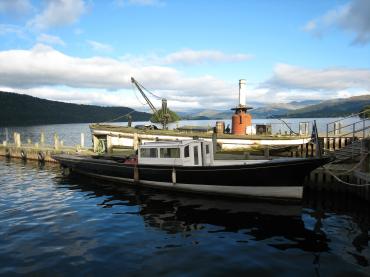
In 1979, the Manchester Steam Ship Preservation Society was formed to rescue the MANNIN 2 from the breakers. The MSSPS achieved their goal and over the following years prevented deterioration and keep the vessel operations with volunteer labour and various fund-raising events such as regattas, open days, and dredging operations.
In the 1990s, the Society was less successful as its founder members reached mature age and in 1996 a new plan for formed to bring MANNIN to show piece condition and allow a public life. The new project team's task was to have her manufactured to original spec. A full-time captain would have MSSPS members as crew on passage to exhibition venues. Her eight steam engines drive every moving part throughout the ship and MANNIN is the last remaining example of an all steam powered single screw dredger.
We are lacking information on this particular vessel. If you have any information on this vessel past or present, please contact us.
What is the vessel’s ability to demonstrate history in her physical fabric?
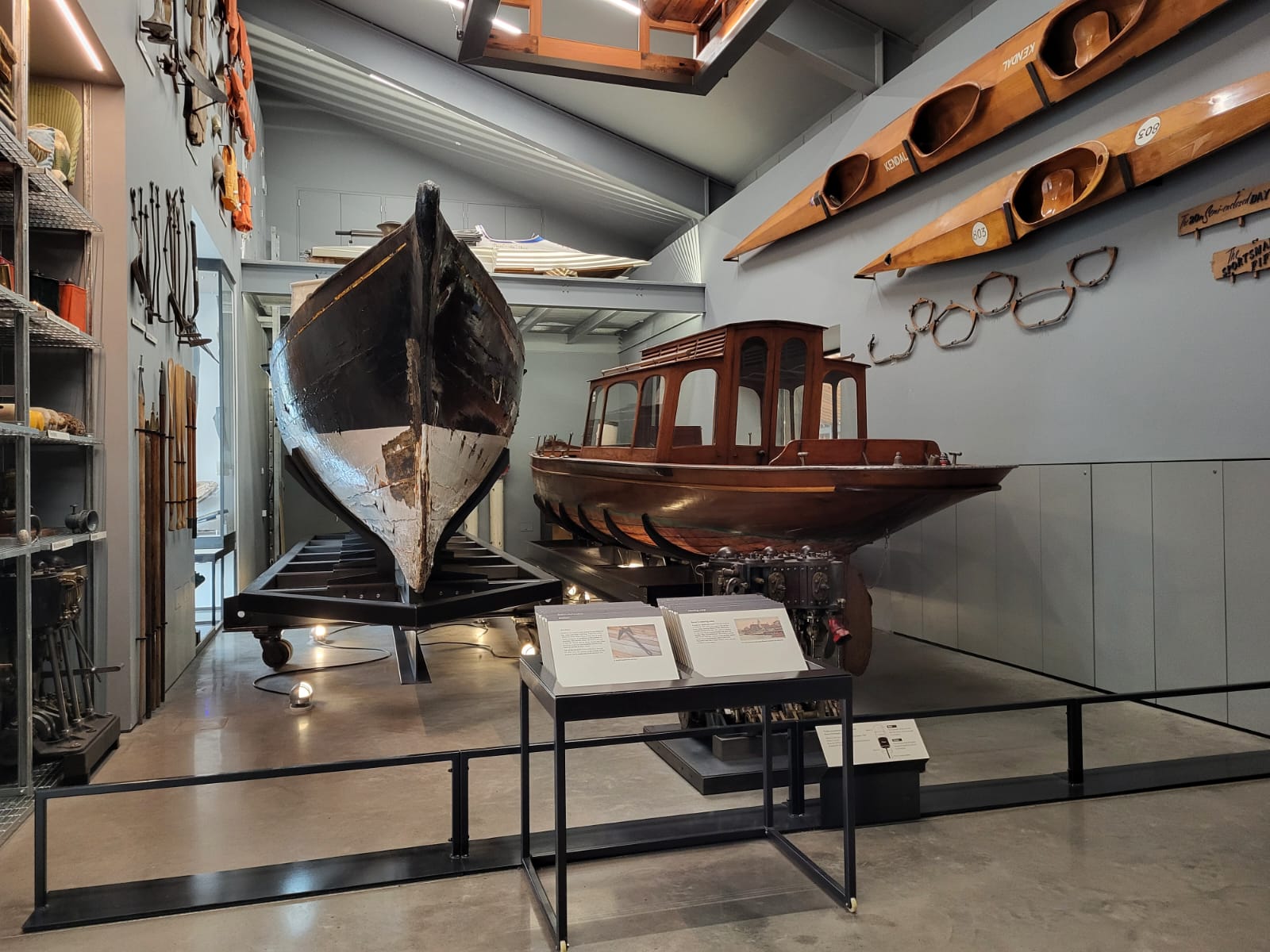
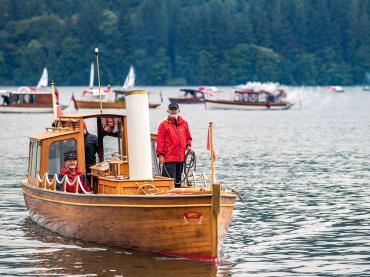
EVA was built in 1874 and is one of the earliest examples of a fast Victorian steam launch. She was designed with the propeller located as far away from the hull as possible so it could operate in clear water, hence the positioning of the rudder ahead of the propeller. This gave her a very large turning circle, making made her difficult to stop. She was successfully used as an umpire launch for three years and, in 1876, she was sold to private collector H.E. Rhodes who added the saloon and relocated the steering position. EVA retains her original engine and was fitted with a new boiler in 1985. Her hull remains largely unaltered following careful conservation work, although steel has now replaced some of the original iron.
What are the vessel’s associational links for which there is no physical evidence?
EVA was built at John I Thornycroft’s yard at Chiswick in 1874 and is believed to have been designed by John Thornycroft himself. From 1874-1876, she was used as umpire’s launch at Henley Royal Regatta. In 1985, she was used for the Granada TV film ‘Sherlock Holmes and the Sign of Four’. Then, in 1989, she took part in the 150th Anniversary celebrations of the Henley Royal Regatta. Her associational links with river users of the Thames are a key element of her significance and demonstrate the importance of her heritage setting today, as a permanent exhibit on display in the Henley Gallery at the River & Rowing Museum.
How does the vessel’s shape or form combine and contribute to her function?
EVA’s hull is made from iron with a fine, flared bow allowing her to run at speed with the bow wave thrown clear away from the hull. She was one of the fastest steam launches of her era, with a non-condensing single cylinder engine and a top speed of 15mph (before the cabin was fitted), making her ideal for use as an umpire’s launch by allowing her to easily keep up with rowing eights. She was designed to carry an umpire, a crew of two and three other passengers at sufficient speed to accompany the races.
Source: Hannah Cunliffe, Policy & Project Manager, National Historic Ships Date: May 2011