

Previous names
- 1911 - 1922 Kindly Light
- 1922 - 1975 Theodora
Details
Construction
Dimensions
History
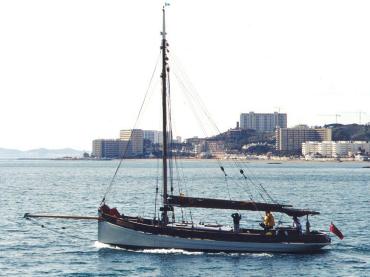
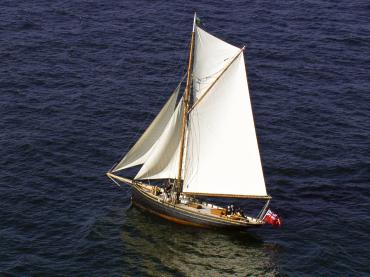
The newly qualified Barry pilot Lewis Alexander commissioned Armour Brothers, of Fleetwood, to build a pilot cutter for him. His selection of yard was due to its forman shipwright, William Stoba, had designed ALPHA, the highly successful Newport pilot cutter of 1904. Lewis Alexander wanted a boat that could beat ALPHA; in November 1911 KINDLY LIGHT was launched and sailed to Barry in south Wales. Costing £525, about 40% more than her contemporary cutters, she had a fine high bow, lean entry and well hollowed lines below the waterline blending into her deep keel. She represents the final evolution of the Bristol Channel sailing pilot cutter and was considered to be the fastest and most successful of over 100 pilot cutters working in the Bristol Channel immediately before the First World War.
By reaching incoming ships first, she made her owner a wealthy man, earning almost three times her building cost in one year, and giving Alexander the record for the greatest number of ships (fourteen) piloted in one week.
KINDLY LIGHT was laid up during the First World War but in 1918 Lewis Alexander and another pilot called Davies recommissioned her and went back into pilotage under sail. The other Barry pilots continued with a rota system which the had implemented from a steam cutter during the war. KINDLY LIGHT made as much money for her two pilots as all the other pilots made together. This created much resentment ; Alexander and Davies were forced to join the amalgamation with the threat of having their licences revoked if they refused. Her owners put KINDLY LIGHT, the last sailing pilot cutter to work out of Barry, up for sale.
She was sold to Lt Commander Linklater and renamed THEODORA for use as a yacht, with a Bergius two-cylinder auxiliary petrol engine installed. Her home port became Poole, in Dorset. She was sold to the Royal Artillery Yacht Club in 1946 and converted for ocean racing. It was during this time that the author Hammond Innes sailed aboard her in a Fastnet Race later writing a story based on his experiences. The Radley and Eton schoolmaster Chris Ellis bought her as a sail training vessel in 1955. She sailed in the first Sail Training Association race to Lisbon in 1956, and beat thirteen yachts including the crack, MYTH OF MALHAM, in a sail training race to Corunna in 1958 on the first leg of a voyage that took her across the Atlantic and back.
In 1960 THEODORA was the founding vessel of the Ocean Youth Club (now known as the Ocean Youth Trust) and continued to take young boys and girls to sea for eleven years until she was sold to the Maritime Trust in 1971. In 1975 she reverted to the name KINDLY LIGHT and two years later was loaned to the Cardiff Industrial and Maritime Museum to become an exhibit in a dry dock. Her condition deteriorated and no funds were available to repair her. In 1993 KINDLY LIGHT was sold by the Maritime Trust to a private owner, Malcolm McKeand on condition that he restored her. She was moved to Lymington.
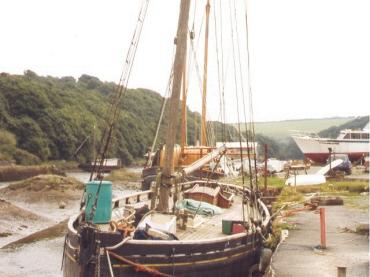
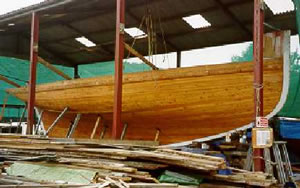
A meticulous and authentic restoration began in November 1993 at Gweek Quay Boatyard, in Cornwall, led by shipwright David Walkey. Her owner researched the traditional methods used in building pilot cutters and the restoration involved no modern glues, laminates or materials, and the vessel has no engines, electrics or even modern heads, making her the most faithful restoration of a British Pilot cutter.
Source: Paul Brown, Historic Sail, The History Press.
Significance
1. What is the vessel’s ability to demonstrate history in her physical fabric? Evidence for designs, functions, techniques, processes, styles, customs and habits or uses and associations in relation to events and people. How early, intact or rare these features are may impact on significance.
KINDLY LIGHT was commissioned by pilot Lewis Alexander and launched in November 1911 by shipwright William Stoba at the yard of Armour Brothers of Fleetwood. Stoba had been sought out specifically due to his previous pilot cutter, ALPHA, having proven to be such a fast vessel. Both vessels departed radically from the more traditionally designed Bristol Channel pilot cutters from Cornish and local yards. KINDLY LIGHT had a fine high bow, lean entry and well hollowed lines below the waterline blending into her deep keel. Converted to a yacht in 1922, she was fitted with a Bergius 2-cylinder auxiliary petrol engine and underwent internal modifications to her accommodation more fitting with her subsequent use for cruising and then offshore ocean racing and sail training. In later life, she fell into disrepair having been out of the water for a considerable time with minimal maintenance. On the basis of extensive research, a major reconstruction back to her original configuration was undertaken between 1993 - 2011. No modern glues, laminates or new materials were used and the vessel was not fitted with an engine or electronics. She has no hull openings and the original parts that had been lost, such as the pump, metal trim and anchors have been faithfully reproduced from images and exact measurements. Whilst lacking in original fabric, all aspects of her hull form, rig, deck layout and accommodation are as close as possible to her time in commission as a pilot cutter. Under the mast is placed the original coin dated 1854, the birth year of her designer William Stoba.
2. What are the vessel’s associational links for which there is no physical evidence? Associations with people or places. Off-ship research.
KINDLY LIGHT has strong associations to the Bristol Channel and specifically the port of Barry in Wales. Commissioned by local pilot Lewis Alexander at a cost 40% more than contemporary cutters soon paid off. By enabling Alexander to reach incoming ships first, she made her owner a wealthy man, earning almost three times her building cost in one year, and giving him the record for the greatest number of ships (fourteen) piloted in one week. Whilst forced into layup during the First World War, she was one of the last pilot cutters to seek under sail following cessation of hostilities. This was at a time that the pilotage service was undergoing amalgamation with pilots forced into this method of working under threat of having their licenses revoked. Amalgamation signaled the end of sailing pilot cutters seeking incoming ships, with KINDLY LIGHT being the last to sail out of Barry.
In 1946, under the name THEODORA, the Royal Artillery Yacht Club converted her for ocean racing. During this time, the author Hammond Innes sailed aboard her in a Fastnet Race, later writing a story based on his experiences. She was bought by the Radley and Eton schoolmaster Chris Ellis as a sail training vessel in 1955, sailing in the first Sail Training Association race to Lisbon in 1956 and making an Atlantic crossing in 1958. In 1960, she became the founding vessel of the Ocean Youth Club (now known as the Ocean Youth Trust) and continued to take young boys and girls to sea for eleven years until she was sold to the Maritime Trust in 1971. She then re-affirmed her Welsh connections as an exhibit for the Cardiff Industrial and Maritime Museum from 1975 until 1993. KINDLY LIGHT’s history has been researched extensively by the present owner. She is well documented in pilotage records, a glass negative collection and oral recordings of pilot Lewis Alexander talking about his career. The apprenticeship documents for Lewis Alexander also survive, along with his licenses carried when boarding ship and the original barometer. KINDLY LIGHT was recorded on the National Register of Historic Vessels in 1996 and given National Historic Fleet status.
3. How does the vessel’s shape or form combine and contribute to her function? Overall aesthetic impact of the vessel, her lines, material she was built from and her setting. Does she remain in her working environment?
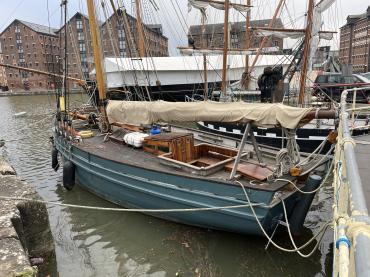
As a sailing pilot cutter, KINDLY LIGHT was designed to operate in the notorious tidal ranges found in the Bristol Channel and was heavily built of pitch pine planks on oak frames to facilitate operation far out into the North Atlantic, West of Lundy Island, seeking out vessels making for her home port of Barry. Bristol Channel pilot cutters were built to withstand all weather conditions with the minimal crew of a mate and apprentice pilot. For practical reasons, they had no running backstays, Appledore patent reefing on the boom, a self-draining cockpit and all sail controls led aft within the reach of the helm, as was the bilge pump. KINDLY LIGHT’s hull design with its striking white painted boot-top was a stark deviation from the normal pilot cutter profile with fine high bow, lean entry and well hollowed lines below the waterline blending into her deep keel enabling her to sail fast whilst remaining easily handled. She was reported to be wet, tender and difficult to heave-to on station, but met the brief of being faster than her competitors. She is flush decked with bulwarks as was typical of Bristol Channel pilot cutters and her foredeck has a small, offset forehatch with the bowsprit running in on the other side, a basic windlass and a set of bitts built to withstand the forces developed under the occasional tow. Whilst not currently in commission, KINDLY LIGHT is maintained in excellent condition afloat under a well-ventilated cover at a Falmouth marina.
Sources:
Tom Cunliffe, Pilot Cutters Under Sail, Seaforth, 2013
Author:
Peter Green, National Historic Ships UK
December 2025
Key dates
- 1911 Licensed as a Barry pilot boat for pilot Lewis Alexander
- 1913 Put pilot onboard 14 vessels in one week - a record under sail
- 1914 Last vessel to sail before the war - fired across her bows to bring her into port
- 1918 Re-commissioned. One of the very few vessels to 'seek' under sail post-war
- 1922 Sold to Lieutenant Commander Linklater as the yacht THEODORA
- 1946 Sold to Lieutenant Col. Parsons, Lieutenant Col. French and Major Scholfield, Royal Artillery Yacht Club Re-rigged for Ocean Racing
- 1955 Sold to Chris Ellis, a Radley schoolmaster Started sail training
- 1956 Took part in first Sail Training Association race to Lisbon
- 1958 First out of 13 yachts in the race to Corruna with a schoolboy crew
- 1960 Founding vessel of the Ocean Youth Club
- 1971 Sold to The Maritime Trust
- 1975 Name changed back to KINDLY LIGHT
- 1977 Became an exhibit at Cardiff Industrial and Maritime Museum
- 1993 Sold back into private ownership and moved to Gweek, Cornwall to begin restoration
-
2011
Re-launched at the National Maritime Museum Cornwall to mark her 100th birthday
Sources
Sullivan, Dick, Old Ships, Boats and Maritime Museums, Coracle Books, 1978
Classic Boat: Restoration award for Pilot Cutter, pp21, October 2012
Classic Boat: The final few, June 1999
The Wave: Kindly Light re-launched, 2012-2013
The Wave: Kindly Light: the philosophy behind her re-commissioning, 2012-2013
Own this vessel?
If you are the owner of this vessel and would like to provide more details or updated information, please contact info@nationalhistoricships.org.uk