As the year comes to an end, so does our celebration of the 200th anniversary of British Rail. Today, we'll see an overall history of the connections between rail and maritime heritage throughout the last 200 years, and how these continue today.
The history of Britain’s railways is closely intertwined with its maritime and inland waterways heritage. From their earliest development, trains and vessels worked together to transport people and goods efficiently, a partnership that laid the foundations for today’s integrated transport systems such as container ports. Railway companies frequently operated their own fleets of ships to extend their commercial and tourism reach, while railways were also used to move vessels from their construction sites to operational locations. These historic links remain visible today through ongoing collaborations and shared heritage projects.
The partnership between rail and sea began early in the railway age. After the opening of the Stockton & Darlington Railway in 1825, railway development expanded rapidly. A major milestone came in 1833 with the construction of the Great Western Railway (GWR), led by engineer Isambard Kingdom Brunel. Linking London to the important port city of Bristol, Brunel envisioned rail and maritime transport as a single system. This led to the creation of the Great Western Steamship Company in 1837, which operated transatlantic services to New York. Brunel’s vessels, Great Western and Great Britain, were groundbreaking in size and design, symbolizing how combined rail and maritime innovation drove technological progress.
Railways also played a vital role in supporting lifesaving services. The Royal National Lifeboat Institution (RNLI), founded in 1824, relied heavily on rail transport to move lifeboats to coastal stations. By the 1860s, nearly all lifeboats were transported by rail, often free of charge, demonstrating strong cooperation between the two sectors.
By the late 19th and early 20th centuries, rail and maritime collaboration reached its peak. Railway-owned or affiliated paddle steamer fleets provided seamless travel experiences for tourists, particularly those visiting seaside resorts. Trains brought passengers from inland areas to coastal ports, where excursion steamers offered leisure cruises and extended journeys. This partnership benefited both industries, boosting tourism while providing affordable escapes from industrial urban life.
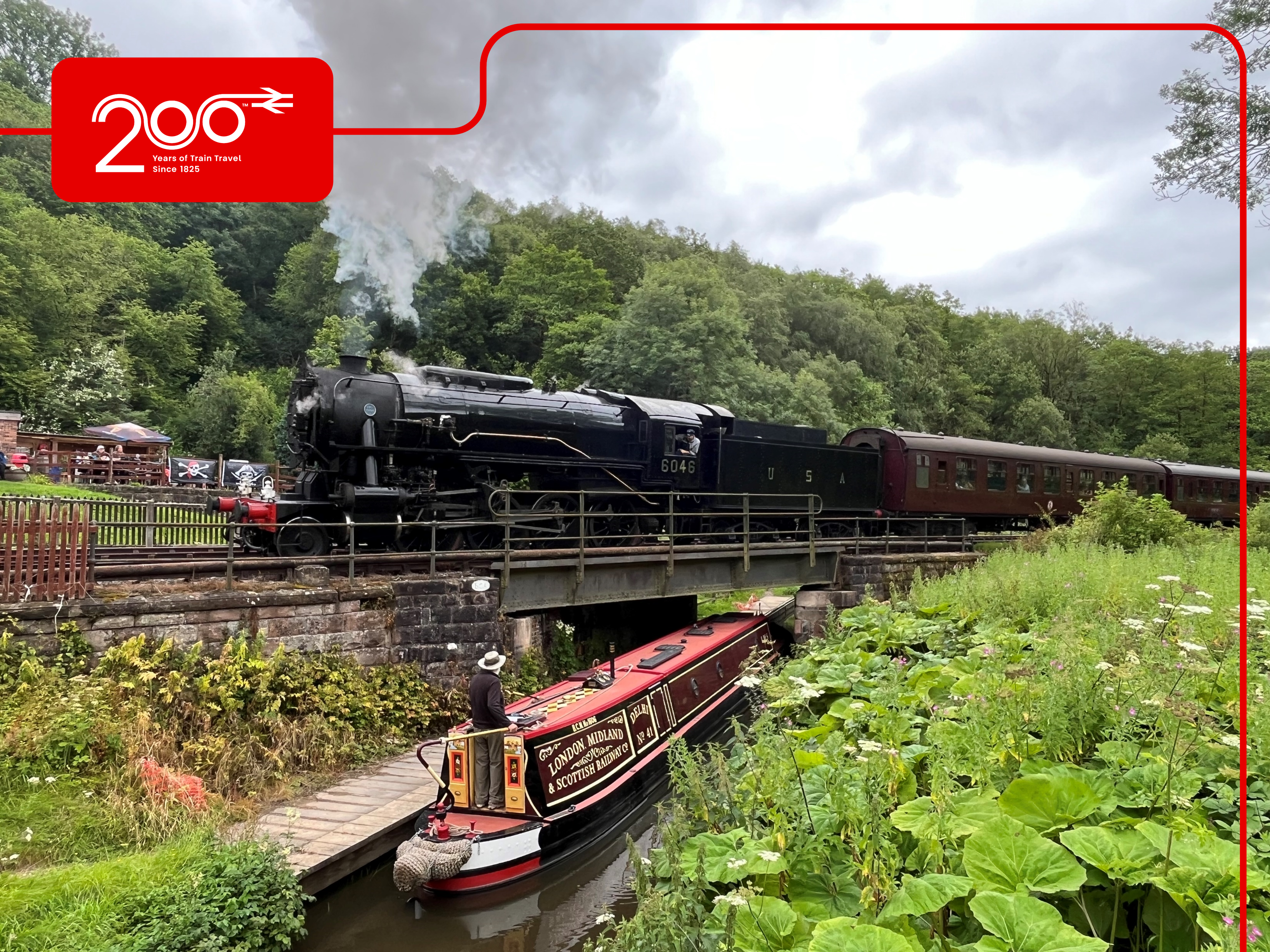
Railway companies also became deeply involved in inland waterways. Although railways reduced reliance on canals, the two systems complemented each other. Many railway companies owned canal boats, using them to transport goods from factories and mines to rail interchange points. When the London, Midland and Scottish Railway was formed in 1923, it inherited extensive canal networks and vessels, some of which still display original railway liveries today.
Although many connections weakened in the mid-20th century due to declining steam operations, heritage preservation has kept the relationship alive. Vessels such as PS Kingswear Castle and PS Waverley illustrate how historic ships and railways continue to operate together. These preserved icons now offer joint rail-and-river experiences, celebrating 200 years of shared heritage and ensuring the enduring bond between railways and maritime transport continues into the future.
We hope you enjoyed the Railway 200 Fridays series, and learned some more about how these two mobile heritages are intertwined!