
Previous names
- Dundee
Details
Construction
Dimensions
History
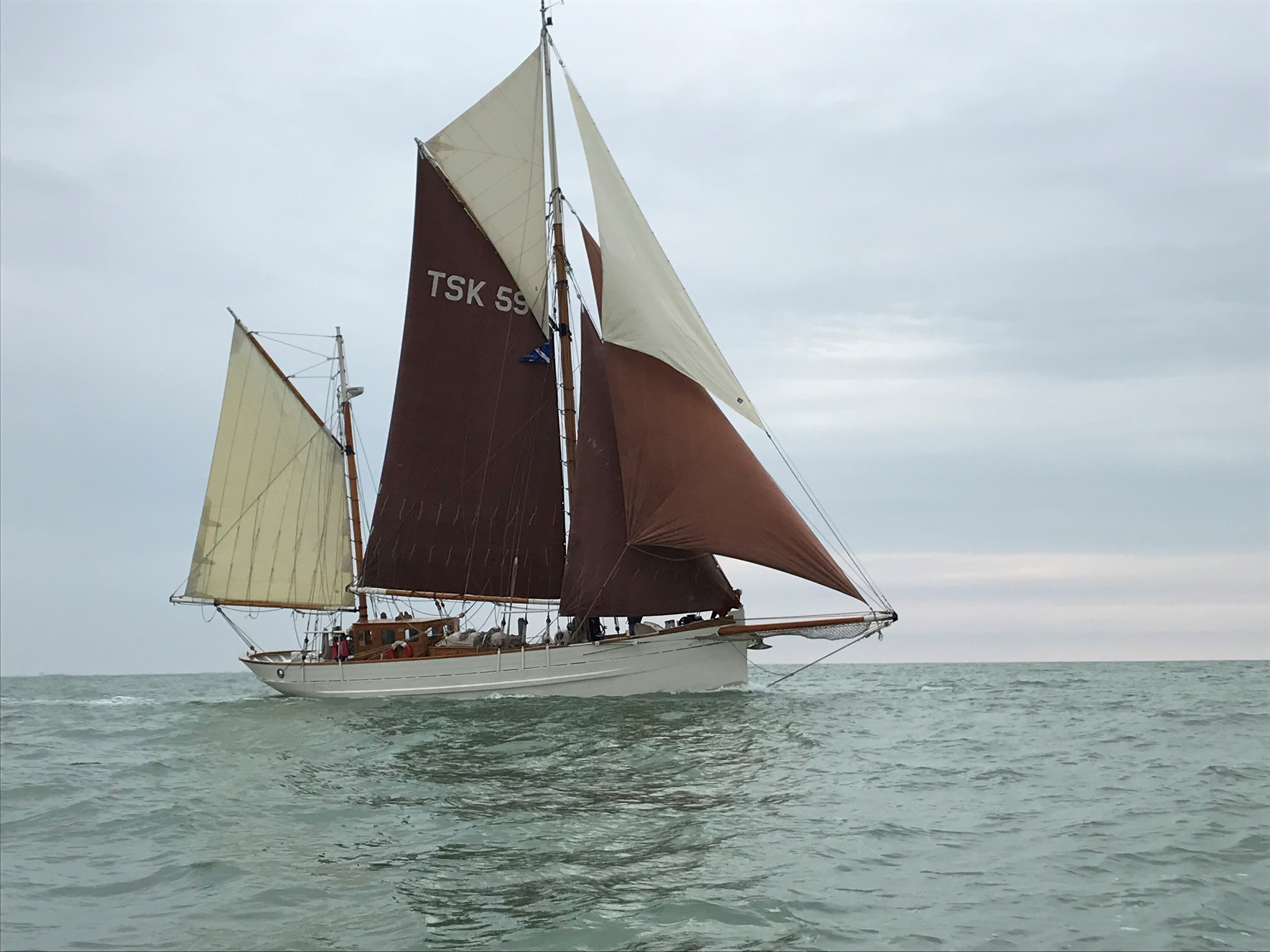
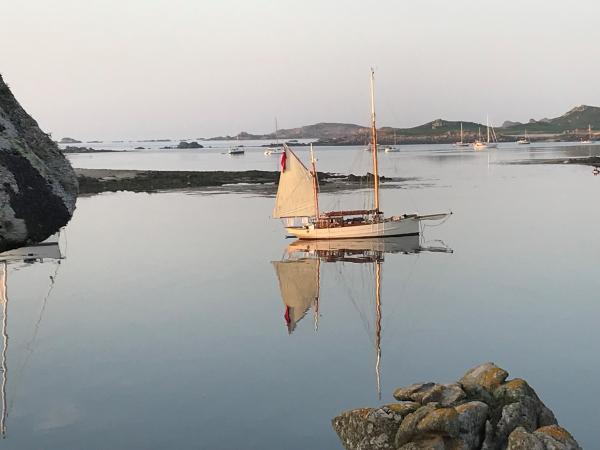
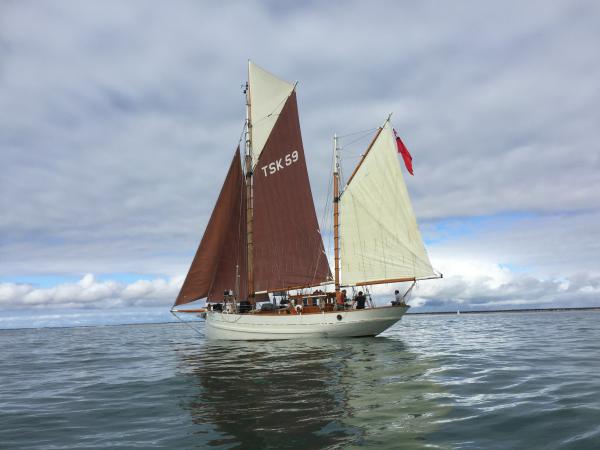
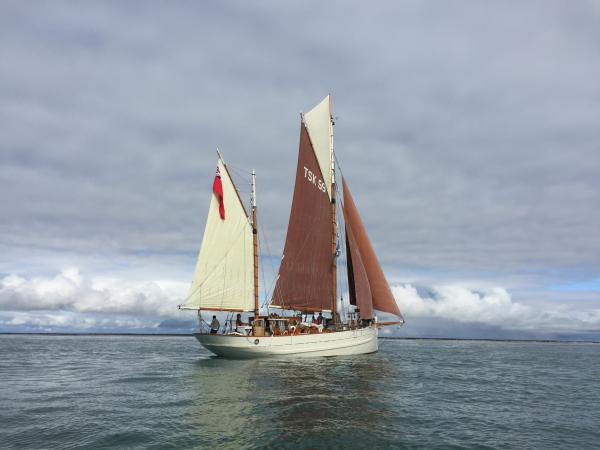
ANGELE ALINE, a gaff ketch, was built in 1920 by The Boatyard at Fecamp, Normandy, and originally named JEAN. She is a 'Dundee' - a French corruption of 'Dandy' - the name given by British East Coast fishermen in the 1860s to an elegant new type of ketch later adopted by the Fecamp yard where she was built. She was ordered by Jules Talleux and partners to be used as a sailing trawler, to fish off Newfoundland and for the Scottish herring fisheries. When she first went fishing from the port of Gravelines, just west of Dunkirk, she had no engine, but was towed out to sea where she would hoist her brown gaff mainsail, mizzen, gallant topsail and two foresails on her way to the distant fishing grounds. Later she was fitted with a succession of powerful diesel engines, which enabled her to fish under power, and her sails were used less often.
At some time in the 1930s, she was sold by the Talleux family to Gerard Schollaert of Nieuwpoort, Belgium, who renamed her ANGELE ALINE - the Christian names of his twin daughters - and owned her until 1948.
During the night of 28th May 1940, when she was sailing from St. Valery en Caux, Normandy, where she had gone for a new propeller, she was commandeered by the French navy to assist in the evacuation of Dunkirk - Operation Dynamo. She must have embarked her passengers in the port of Dunkirk, because her deep draught would not have allowed her to come close to the beaches. There is no record of the number of trips she made - presumably ferrying troops from the harbour to the warships anchored in deep water off the coast.
ANGELE ALINE was sunk by British aircraft while fishing off St. Vaast-la-Hougue, Normandy, in 1941. Permission was given by the Germans to refloat her on 17th April and they used her to blockade Nieuwpoort harbour entrance in 1943. Later she was allowed to continue fishing, sometimes carrying German guards to prevent her being used by the Resistance. She was also involved in three mine explosions between 1946 and 1951.
In 1963 she was sold to a Dutch couple, Binne and Dagmar Groenier, who restored her to her former beauty as a gaff ketch, and converted her into their floating home. They lived and brought up their children on board over the next 20 years, often sailing her along the coast and across the Channel.
The Groeniers sold the vessel to Gareth Wright, an Englishman who brought her to London and St Katherine's Dock. She was then spotted by George and Meriel Thurstan. He took some pictures and then returned home to his wife to say: "I've found my dream boat", but it was three years before he could buy her. Meanwhile she sailed thousands of miles, taking part in some of the Tall Ships Races, including two crossings of the Atlantic. In December 1984 the Thurstans realised their dream and spent the next 18 months on a major programme of restoration before leaving England in their new home during May 1987 to start a voyage around the world.
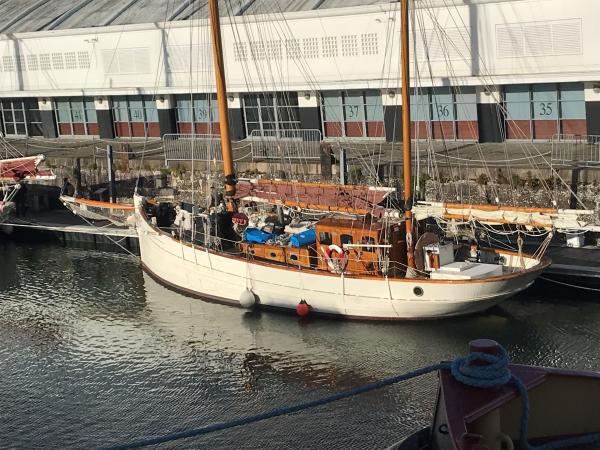
In 1990 the Thurstons brought the vessel back to the UK, where she was bought by Neil and Jenny Attenborough. Under their ownership, she underwent major reconstruction work between 1991 and 1999, being fitted with a new Caterpillar engine and generator, and rewired, replumbed, and completely re-rigged. 80% of planks, 60% of frames, all beams, 40% of deck, stringers, both masts, all spars, main engine, electrics and all fittings were replaced. A new pilot house and coach roof were also added. Despite the ongoing refit, ANGELE ALINE spent a considerable amount of time at sea during this time, venturing forth into the western coast of Ireland and in 1998 up to the islands of Inishbofin, Inishturk and Clare Island, where she survived several storms and gales and explored that very wild and sometimes frightening coast.
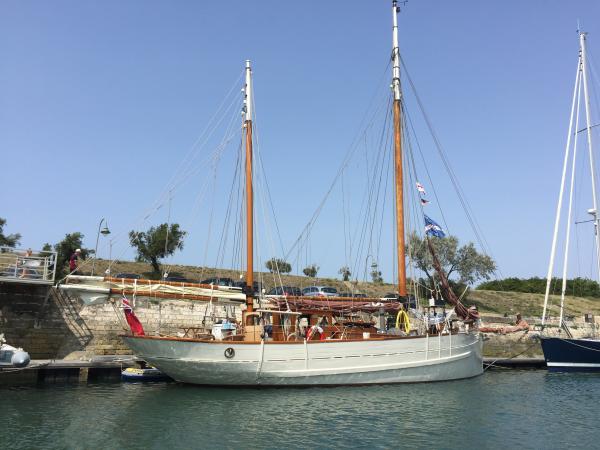
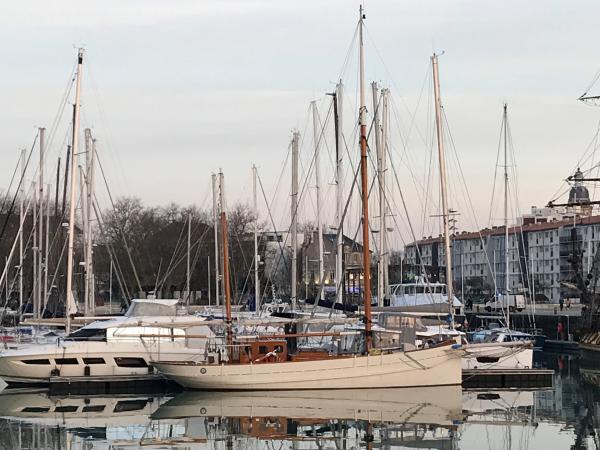
Sold to her current owner in 2015, major renovations were completed that year, with the original ketch rig restored, stem repaired, rudder post and horn timbers repaired and multiple further works. The same year she took part in the 75th anniversary Return to Dunkirk. She is currently based in La Rochelle, France.
Key dates
-
May 2015
Took part in the 75th Anniversary Return to Dunkirk Source: ADLS
Sources
Brann, Christian, The Little Ships of Dunkirk: 1940-1990, Collectors Books Ltd, 1989
Robinson, John, European Maritime Heritage Newsletter: Sharing our Ships, pp1-2, No.9, 2001
Association of Dunkirk Little Ships website
Own this vessel?
If you are the owner of this vessel and would like to provide more details or updated information, please contact info@nationalhistoricships.org.uk