Details
Construction
Dimensions
History
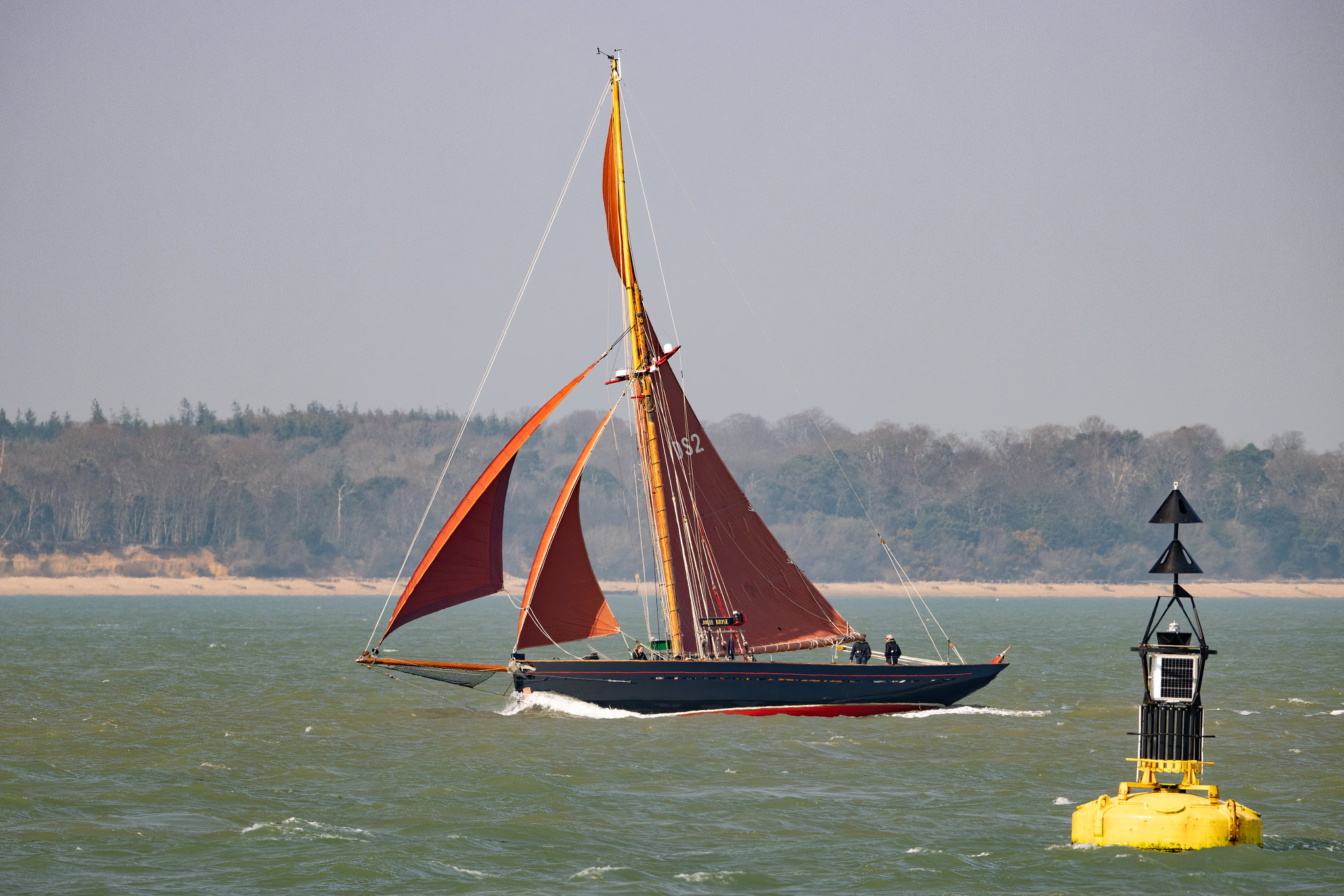
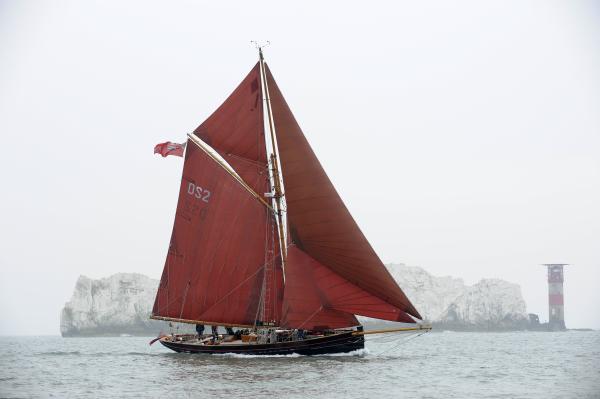
JOLIE BRISE was built and launched in 1913 in Le Havre, France and was the last sailing pilot cutter built by Le Havre. She is also believed to have been the last sailing vessel to carry the Royal Mail under sail.
She was bought in 1924 by E G Martin (the founding member of the Royal Ocean Racing Club, RORC).
As a competitor in the first ever Fastnet Race, JOLIE BRISE has won the Race on three occasions - one of them being in 1930 when she was under the ownership of Bobby Somerset. During this period the vessel was also awarded the Blue Water Medal twice, including the historic rescue of American crew from the yacht ADRIANA during the Newport to Bermuda Race in 1932. JOLIE BRISE has also been crowned overall winner of Tall Ships Races three times.
In 1945 she was sold to an unknown group to sail to New Zealand, but she only made it as far as Lisbon. Sold again that year, she was bought by Senhor Lobato in Lisbon. In 1977 she was acquired by the International Sailing Craft Association in association with Dauntsey's School Sailing Club and the Science Museum.
In 2003 Dauntsey's School bought the vessel outright. She is currently in excellent condition, now sailing with Dacron sails and modern running rigging.
Significance
1. What is the vessel’s ability to demonstrate history in her physical fabric?
Evidence for designs, functions, techniques, processes, styles, customs and habits or uses and associations in relation to events and people. How early, intact or rare these features are may impact on significance.
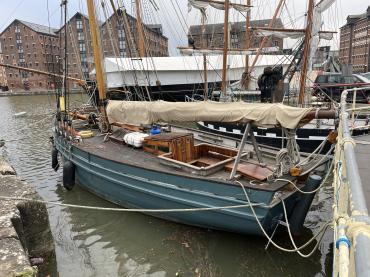
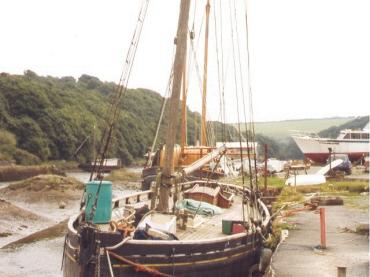
JOLIE BRISE was designed by 33-year-old French naval architect, Alexandre Paris. The son of a boatbuilder, Paris studied the work of Colin Archer, who had transformed the design of many types of traditional craft in Norway, especially fishing, pilot and rescue boats. She was built to plan by Paumelle, who was in partnership with Paris’ father and launched at Normand’s yard in Le Havre in 1913. In her design, JOLIE BRISE represents the ultimate development of the pilot cutter, a much-heralded vernacular type, with her raking keel and well-rounded forefoot. Although converted to a yacht in 1923, this was simply done with minimal adaptation taking the form of a heads, water tank and chart table. After the First World War, her coach roof was raised and in recent years, this has been re-decked in modern materials. In the early 1990s, she underwent conservation work at Exeter Maritime Museum which included re-decking, and her accommodation was later re-fitted at Neilsen’s Yard, when her forward galley stove was also removed. The revised accommodation is suited to her current use as a sail training vessel, with the galley amidships, crew berths in the forepeak and skipper’s cabin aft. A new diesel engine was installed in 2024 and she now sails with Dacron sails and modern running rigging. She retains her original windlass, tiller steering and rig configuration which includes running backstays and topmast. The hull has undergone replacement planking as required but has not been subjected to major reconstruction at any single point. JOLIE BRISE is kept in high quality operational condition thanks to rigorous annual maintenance managed by permanent staff.
2. What are the vessel’s associational links for which there is no physical evidence?
Associations with people or places. Off-ship research.
JOLIE BRISE has strong associations to the port of Le Havre, being the last sailing pilot cutter built there and the penultimate gaff cutter in the French pilot service before the change from sail to steam. She was also the last sailing vessel to carry the Royal Mail under sail. JOLIE BRISE was requisitioned by the French Navy in the early years of the First World War, before being bought in 1924 by E G Martin (the founding member of the Royal Ocean Racing Club, RORC). In his ownership, she played a key role in the birth and development of the sport of ocean racing. She won three out of the first five Fastnet Races and gained first-in-class in the American Bermuda Race. She was awarded the Blue Water Medal twice, including the historic rescue of American crew from the yacht ADRIANA during the Newport to Bermuda Race in 1932. JOLIE BRISE was requisitioned by the Admiralty in the Second World War but did not see active service. She was then bought by the Lobatos, a Portuguese family, in 1945 and moored at Lisbon. During the Portuguese revolution in 1975, she was seen as a symbol of wealth and suffered two attempted arson attacks, before being taken to London where leading secondary school, Dauntsey’s, subsequently took ownership. In their care, JOLIE BRISE has sailed approximately 175,000 nautical miles carrying some 6,500 pupils. She has gained international significance sailing 200 miles inside the Arctic Circle; travelling as far East as St Petersburg in Russia; as far South as Western Sahara and as far West as South Carolina. She was overall winner of the Tall Ships Race in 1980, 2008, 2011, 2015 and 2016, and the Tall Ships 2000 Transatlantic Race programme. A popular and well documented vessel, she was recorded on the National Register of Historic Vessels in 2012.
3. How does the vessel’s shape or form combine and contribute to her function?
Overall aesthetic impact of the vessel, her lines, material she was built from and her setting. Does she remain in her working environment?
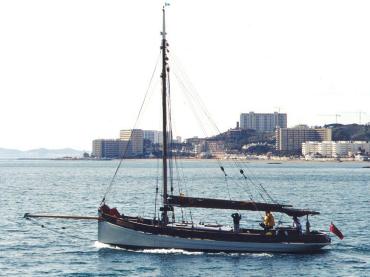
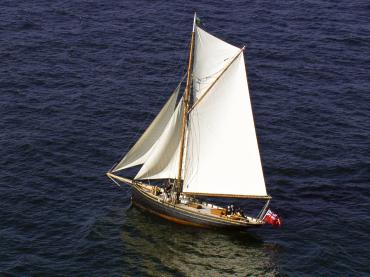
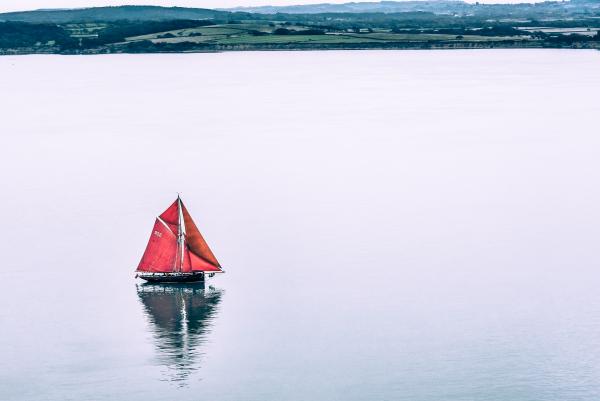
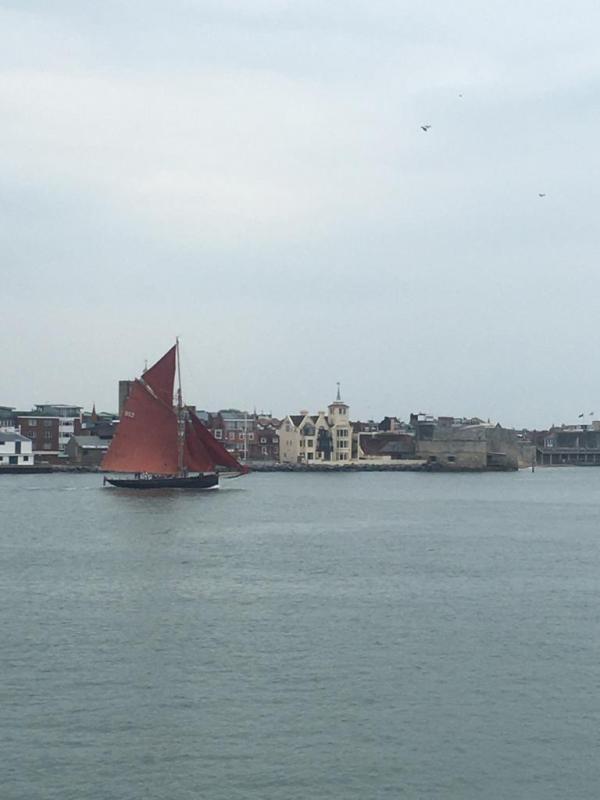
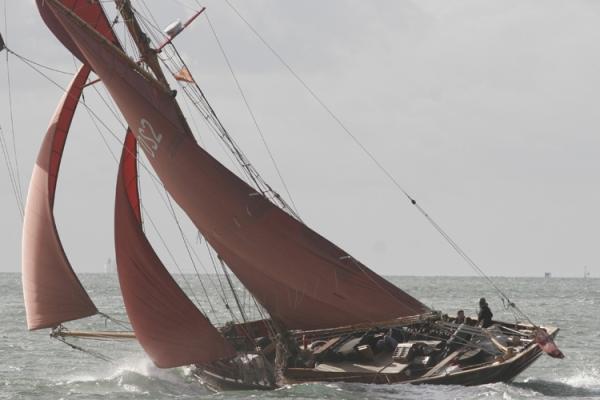
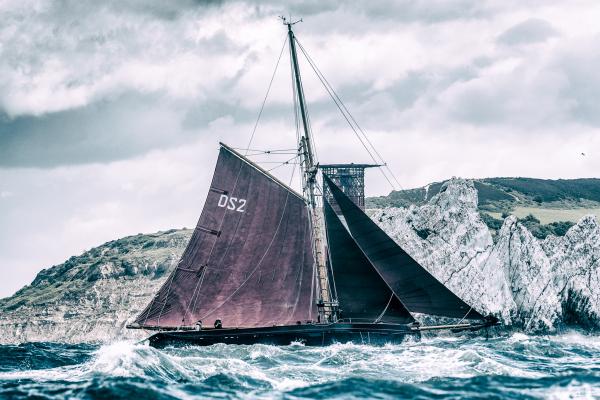
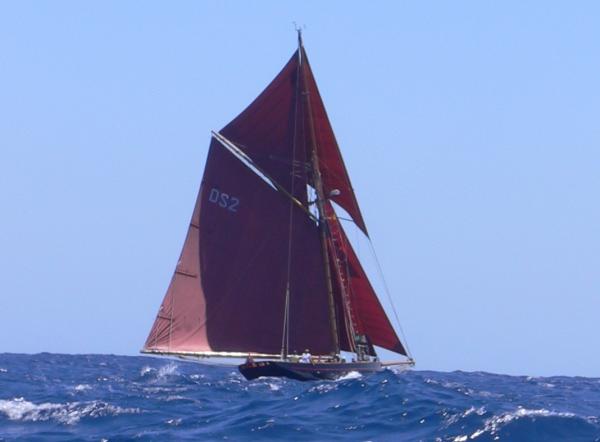
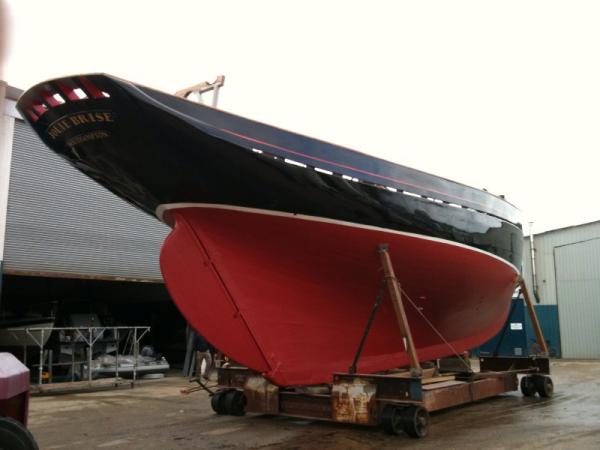
As a sailing pilot cutter, JOLIE BRISE was built to operate in strong tidal conditions around the rocky shores of North-West France. Her hull was designed for speed, manoeuvrability and endurance at sea, with the ability to heave-to in poor weather conditions whilst managed by a crew of only two or three. She was strongly built of 2-inch oak on 5-inch grown oak frames and steamed timbers, with a long straight iron keel with lead internal ballast, a plumb stem, raked stern post and short counter. After leaving the pilot service, she worked as a tuna fishing boat for a short time where her speed and wide flat deck also showed their worth. Her hull has kept its original form without change other than the introduction of a prop shaft when an engine was first installed. Her success as a racing yacht has much to do with her 38-foot-long boom and large sail area, which gave her a good light wind performance, in addition to her ability to withstand stronger conditions. Her striking form, attractive sheer and tan sails make her pleasing to the eye and her speed at sea for a vessel of her type can take your breath away. Her home berth is on the Hamble River, but throughout the summer season she cruises extensively in accordance with the annual programme set by her custodians, Dauntsey’s School.
Author:
National Historic Ships UK, November 2025
Key dates
-
1913
Vessel built in Le Havre, Normandy, France. She was the last sailing Le Havre pilot cutter
-
1924
Bought by E G Martin, founding member of the Royal Ocean Racing Club (RORC)
-
1930
Won the 1930 Fastnet Race
-
1977
Acquired by the International Sailing Craft Association in association with Dauntsey's School Sailing Club and the Science Museum.
-
2003
Bought outright by Dauntsey's School.
Sources
Classic Boat: How Jolie Brise won the first Fastnet, September 2015
Classic Boat: Fastnet celebrity, January 2013
Classic Boat: George Martin- founding father of restoration, June 2015
Own this vessel?
If you are the owner of this vessel and would like to provide more details or updated information, please contact info@nationalhistoricships.org.uk