Previous names
- 1951 - 1951 Sarah Townsend Porritt
Details
Construction
Dimensions
History
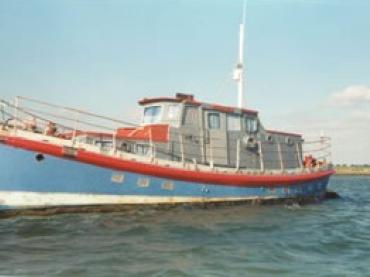
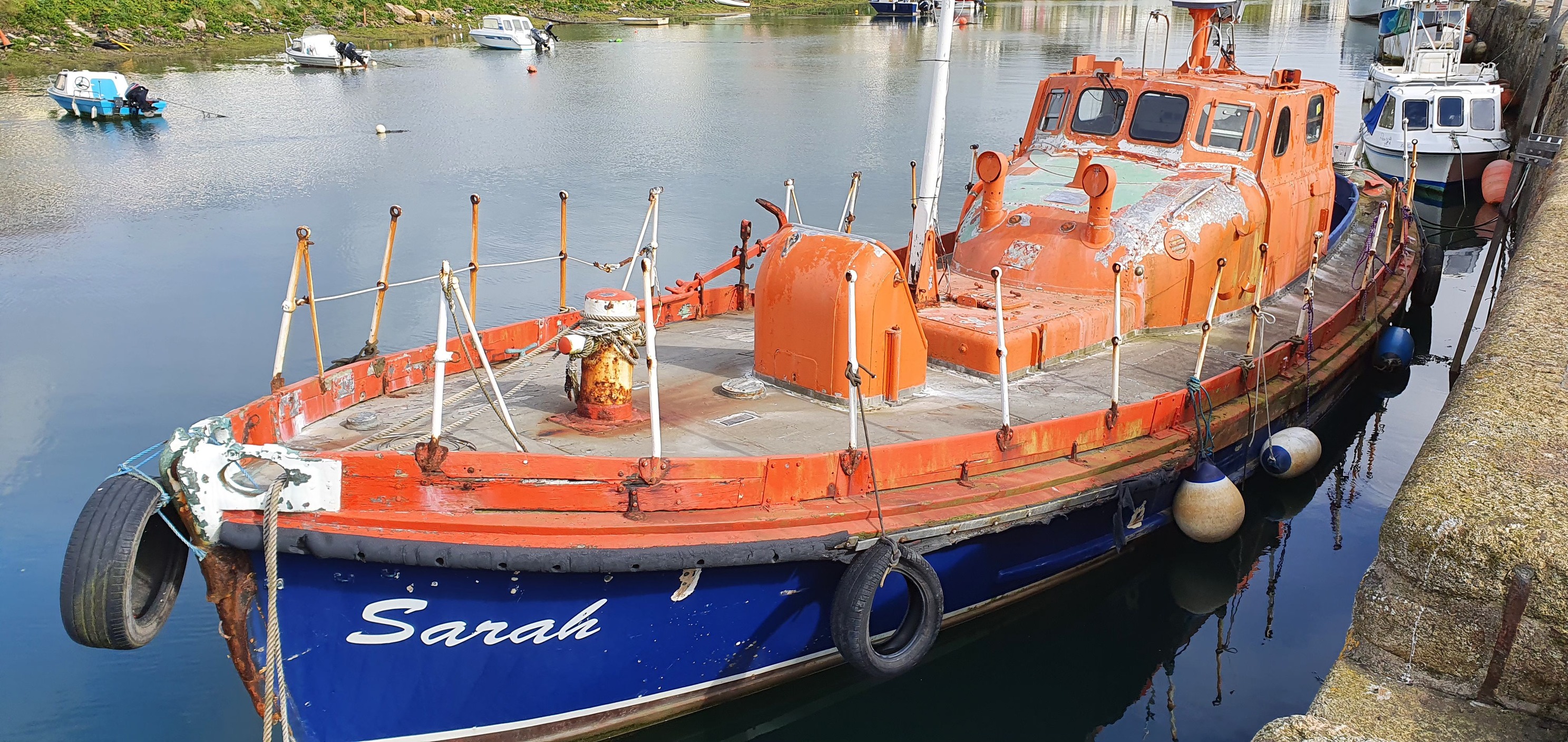
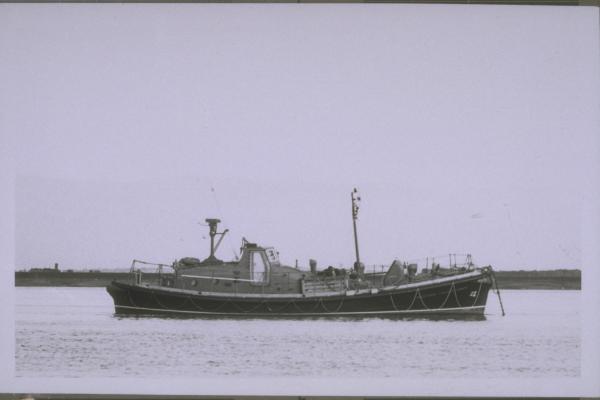
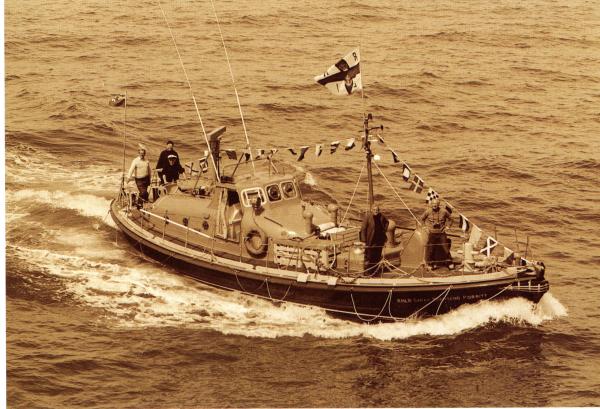
Ex-RNLB SARAH TOWNSEND PORRITT - ON 886 was built by Sussex Yacht Works of Shoreham-by-Sea in 1951. In total she carried out 95 launches, saving 43 lives.
She served at Lytham St Annes from 1951 until 1977, where she was launched 79 times saving 32 lives.
She also served at the following stations in the relief fleet from 1977, where there were 16 launches and 8 lives saved.
Howth - 2 launches, with 1 life saved.
Workington - 1 Launch, with 0 lives saved.
Lytham St Annes - 3 launches, with 0 lives saved Tenby - 4 launches, with 3 lives saved.
Fleetwood - 6 launches, with 4 lives saved.
In addition to the number of lives saved, 2 of her coxswain were awarded the Bronze medals for Gallantry.
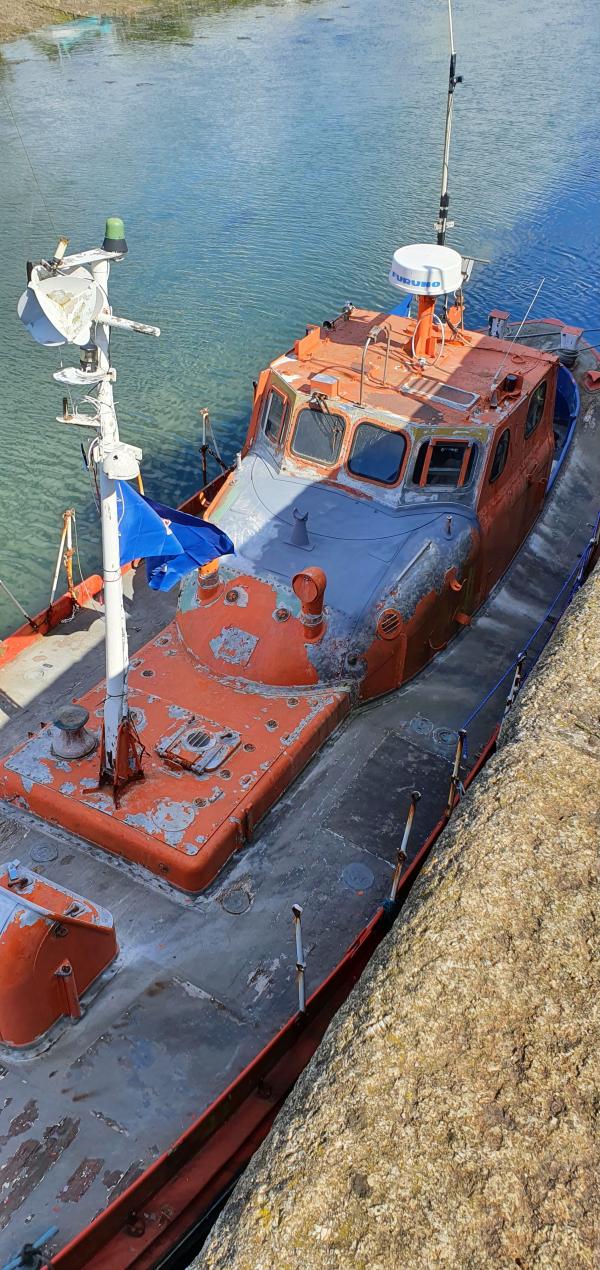
She was sold out of service in 1982. Her current owner bought her in 2021 and is restoring her to seaworthy condition so she can be used for education about the RNLI and water safety, runs afloat for people struggling with mental health and also to keep wooden boat building skills alive, possibly by allowing her to be worked on by apprentices.
Significance
1. What is the vessel’s ability to demonstrate history in her physical fabric?
Evidence for designs, functions, techniques, processes, styles, customs and habits or uses and associations in relation to events and people. How early, intact or rare these features are may impact on significance.
RNLB SARAH TOWNSEND PORRITT (ON 886) is a 46ft 9in Watson Class twin diesel motor lifeboat of double-diagonal mahogany hull construction with a strengthened keel, watertight bulkheads, self-bailing decks and the standardised high-visibility wheelhouse. Although not a prototype, she served as an early platform for operational trials involving radar, VHF radio and helicopter–lifeboat coordination, reflecting the RNLI’s technological development during the 1950s. She retains a high degree of originality with her hull, deck structure, bulkheads, wheelhouse, frames and internal geometry remaining as built. She also retains her original twin engines, tanks and pipework, but her RNLI navigation equipment was removed at the time of decommissioning. Operational wear from her service life is visible in bow-shoulder abrasion, plank repairs and wear around hatches and engine beds, illustrating long-term heavy-weather use. The only structural alteration is the modification of the aft cabin for change of use to a work boat.
2. What are the vessel’s associational links for which there is no physical evidence?
Associations with people or places. Off-ship research.
SARAH TOWNSEND PORRITT was built by Sussex Yacht Works of Shoreham-by-Sea in 1951 and named after the Porritt family of Lancashire, notable philanthropic industrialists whose legacy funded the lifeboat. She has strong local associations to Lytham St Annes and the Ribble Estuary, where most of her rescues took place. Several members of her 1950s–70s service complement are still alive, providing first-hand recollections of her operational use, character and role within the community. Her Relief Fleet service also links her with several coastal communities, such as Howth, Workington, Tenby and Fleetwood. She represents the RNLI’s transition from traditional motor lifeboats to radar- and radio-equipped rescue craft and contributed to early helicopter-supported search and rescue development. She was launched 95 times, saving 43 lives. Her service record includes two RNLI Bronze Medals awarded to Coxswains J.H. and H. Parkinson for gallantry (1955 and 1962) and multiple awards of the Institution’s Thanks on Vellum. Significant rescues were WENDY OF PRESTON (1951), PENBOCH (1955) and LONE SEEKER (1962), as well as two international vessels (Dutch 1961 and Cypriot 1974). She is extensively documented through service logs, RNLI reports, medal citations, contemporary press coverage, naming-ceremony material, original drawings and photographic archives. SARAH TOWNSEND PORRITT was recorded on the National Register of Historic Vessels in 2022.
3. How does the vessel’s shape or form combine and contribute to her function?
Overall aesthetic impact of the vessel, her lines, material she was built from and her setting. Does she remain in her working environment?
Built for lifesaving work in all conditions, her prominent wheelhouse, purposeful sheer line and robust bow give a strong, functional aesthetic look characteristic of mid-century RNLI design. These elements communicate stability, seaworthiness and readiness for service. The RNLI’s use of double-diagonal mahogany planking, oak frames, galvanised fastenings and watertight bulkheads has significantly contributed to her survival. The twin engines and propellers gave good manoeuvrability, essential when approaching vessels in distress or vulnerable survivors in the water. Located in Cornwall, SARAH TOWNSEND PORRITT remains structurally intact, although not currently operational.
Source: Saving Our Sarah CIC, December 2025
Own this vessel?
If you are the owner of this vessel and would like to provide more details or updated information, please contact info@nationalhistoricships.org.uk
More like this
Registered, built 1933 by Groves & Gutteridge Ltd, Cowes
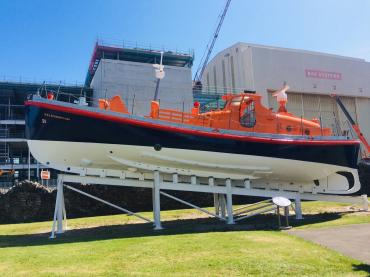
Registered, built 1951 by White, J Samuel & Co Ltd, Cowes, Isle of Wight
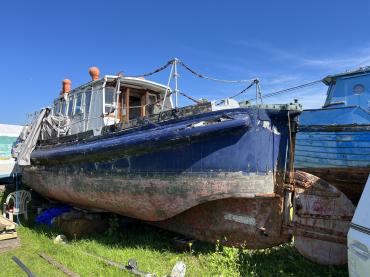
Archived, built 1932 by Groves & Gutteridge Ltd, Cowes