Previous names
- 1932 - 1940 Bluebird
- 1932 - 1933 Frebelle III
Details
Construction
Dimensions
History
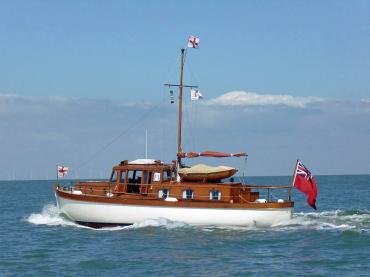
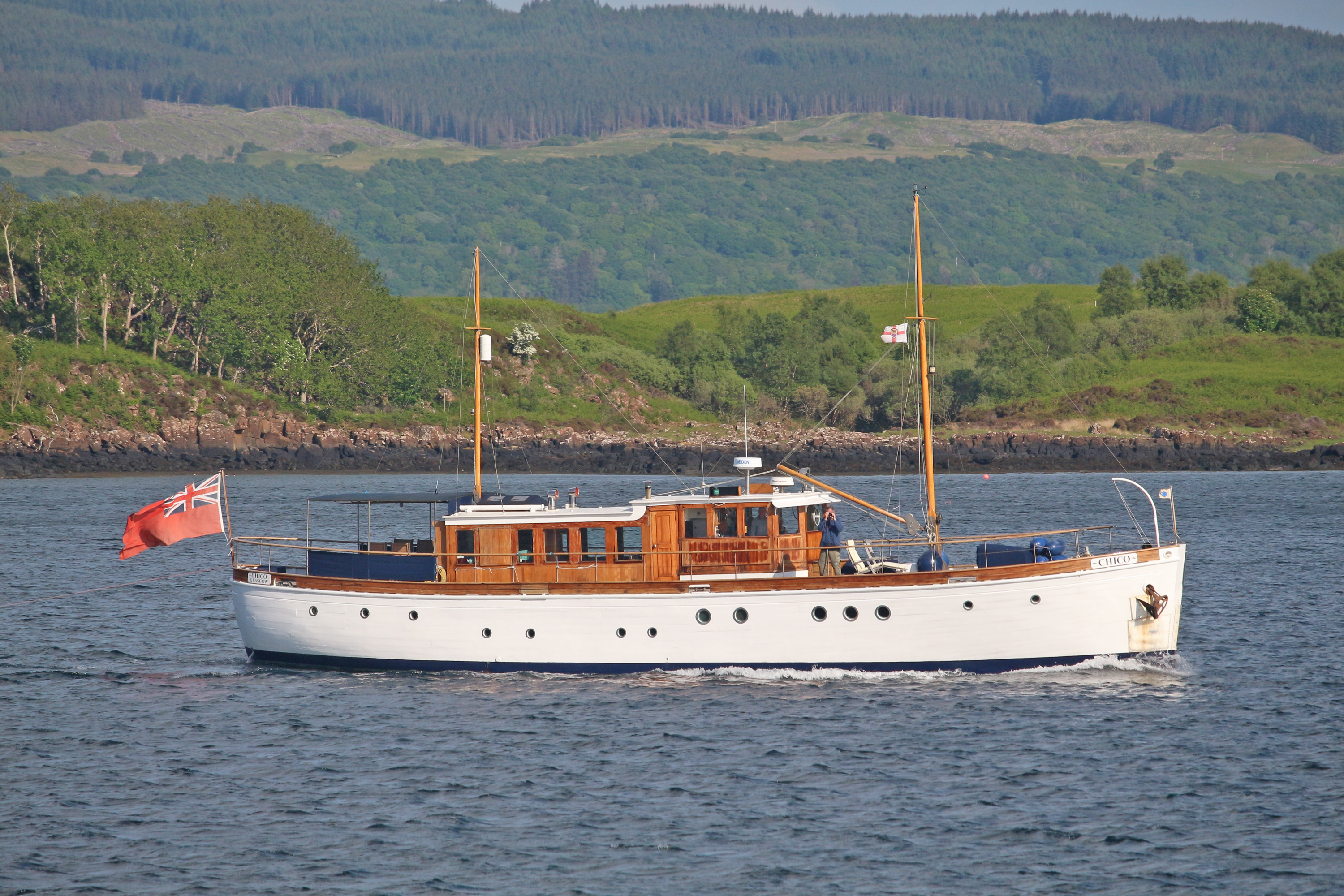
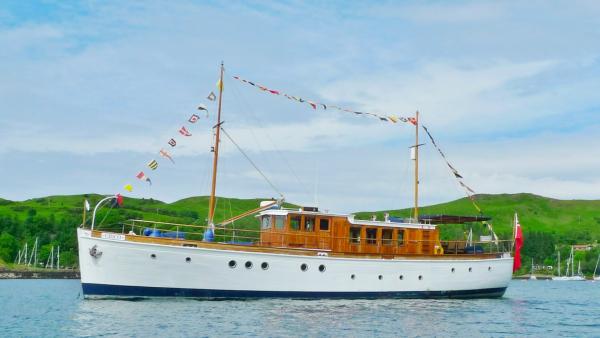
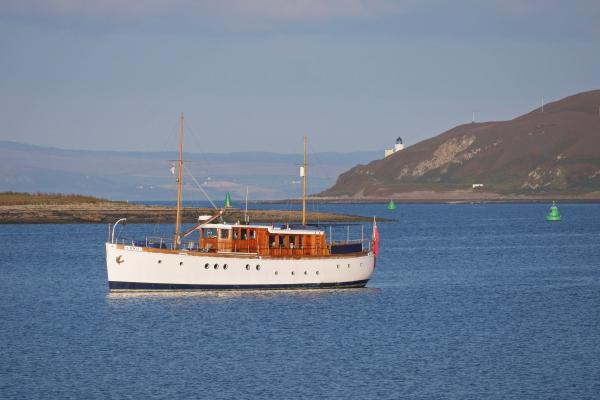
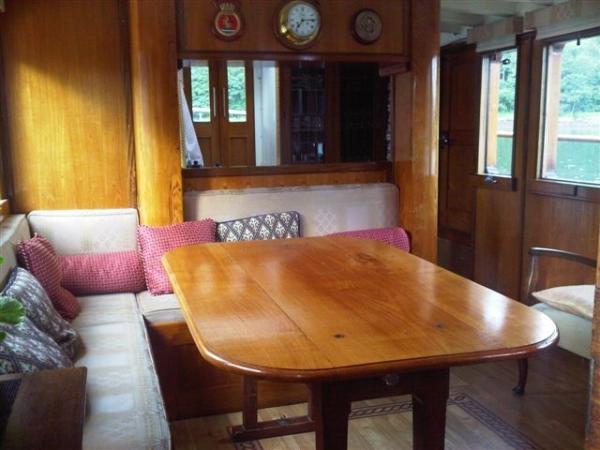
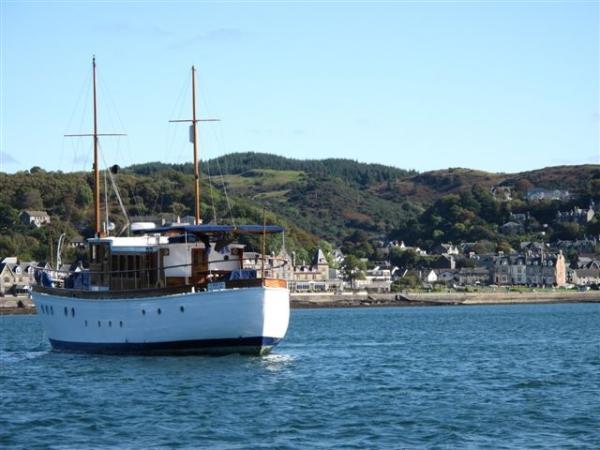
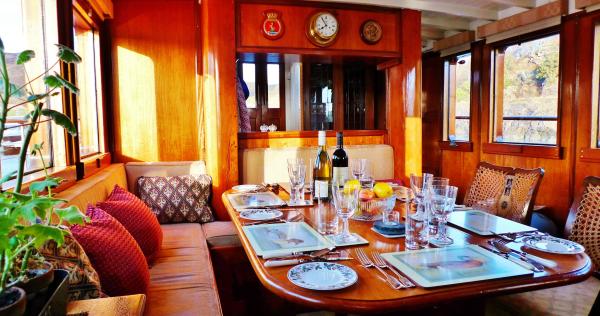
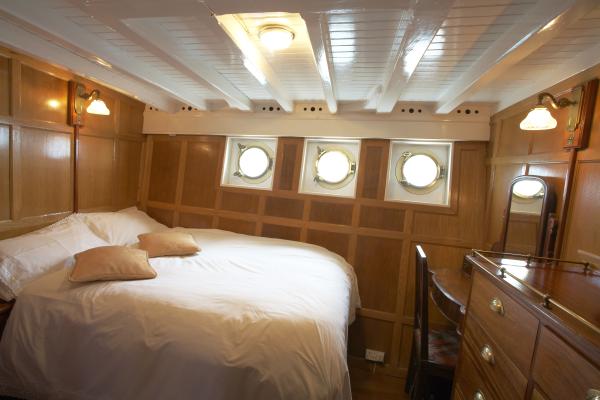
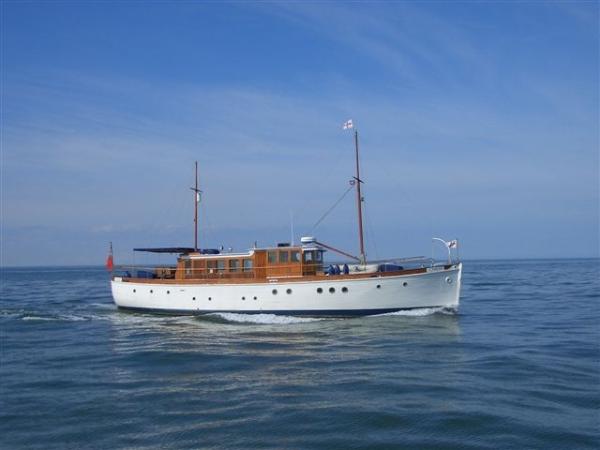
Built in 1932 by J. N. Miller & Son at St Monans for Frank Robinson Beavan of Newcastle, she was launched as FREBELLE III. She was then sold to Sir Malcolm Campbell (the holder between 1924 and 1948, of several of the world's land and water speed records) in 1933, the third of four motor yachts he was to own between the wars, each in turn called BLUEBIRD. She is built of pitch pine on oak frames with a copper sheathed bottom. She was fitted originally with Gleniffer engines, but these were changed for Gardners in 1998 during an extensive refit.
On 28th December 1939 she was requisitioned for service with the Rear-Admiral, Minelaying Squadron. She was fitted out with echo sounding gear at Camper and Nicholson at Gosport and in January 1940 was then re-named CHICO. Her career in the Navy was a particularly illustrious one and is well recorded in her log, preserved from those days.
On leaving the fitting out yard in 1940, she worked up as necessary at Brightlingsea before proceeding to her base in Dover. Here, she was commissioned as CHICO on 6th March 1940. In May 1940, she took part in the evacuation of the British Expeditionary Forces from Dunkirk. At 21.30 on 25th May, CHICO was part of a small force which sailed for Calais Roads ready to evacuate troops the moment an order to do so was received. Commander W.V.H. Harris, RN was in command. On arrival off Calais, two of the motor boats were ordered into Calais harbour. At about 0300 on the 26th, a signal was received that Calais was to be held at all costs; furthermore, it was ordered that this signal was to be sent by hand to the Brigadier commanding British forces on shore. The Conidaw went in to deliver the signal. All ships were then ordered back to the Downs.
On 30th May the CHICO (under Sub -Lieut. J. Mason, RNVR) left Dover for Dunkirk where she embarked 217 troops and returned to Dover. On the 31st she ferried nearly 1,000 troops from the Dunkirk shore to ships, disembarking a further estimated 100 troops herself on her return to Dover. On 2nd June, she was transferred to life-saving duties on Route X - a new middle route prepared between Dover and Dunkirk, from the North Goodwin to the Ruytingen Pass and thence into Dunkirk Road.
On 20th March 1941 the small ships of the Dover Command assisted in the destruction by the minesweeping force off Dungeness of an enemy bomber, almost certainly a Junkers 88. At about 1400 hours the minesweeping trawler Fyldea, the senior ship, reported an attack by enemy aircraft. The machine dived to attack and was greeted with machine-gun fire from the drifters Young Mon, and Forecast and from the CHICO, all serving with the mine sweepers. Possibly the most credit was due to the Young Mon, whose gunlayer, with a single Lewis gun, coolly withheld his fire, but, once he started continued until the plane coming up from astern was within fifty feet. The CHICO, two or three hundred yards astern of the Young Mon, and also the Forecast on the beam joined in. The CHICO claimed to have shot the tail off when the aircraft was between her and the Young Mon, while the latter put a pan straight into the nose. Whoever was responsible, the Young Mon had her masts carried away and received large pieces of aeroplane on her after deck, the fuselage having, fortunately, disintegrated just before reaching the ship, leaving one engine to fall into the water on each side, with nothing very solid ending up on board. There were no casualties in any of H.M. Ships but none of the crew of the aircraft survived.
On 4th April, while engaged on survey work in the Downs, CHICO again received a little attention from an enemy aircraft. The latter was being hunted by British fighters and let go some bombs which fell not far from the yacht but without causing any damage.
CHICO was compulsorily acquired by the Navy on 7th May 1941. On 15th May aircraft again figured in her life. She had left Dover at about 0800 to work at C2 Buoy, servicing it and fitting a rescue ladder. At about 1510, in the vicinity of C1 Buoy during her return passage, she was close to MTB 50, who was on the opposite course, on passage from Dover to Portsmouth, when each was attacked by a separate aircraft. Two Dorniers appeared out of the cloud and carried out shallow dive attacks. Each aircraft opened fire with machine guns and cannon and dropped five bombs. Several near misses were observed. CHICO suffered no damage, only the disappointment of having the best of her many guns, a 20mm cannon, jammed as a result of excessive zeal in over-charging the magazines. MTB 50 was taken in tow by CHICO and brought safely back to Dover, which was reached at about 20.30 without further incident, thanks no doubt to a close escort provided by three fighters. CHICO continued her activities without incident, but on 4th June 1942 she sustained minor damage when she collided with some MTB pens, breaking her sternpost and her covering board and all her planks from the deck to one foot above the water line. On 29th July, with a demolition cutter, she commenced work on the wreck of the trawler Tranquil which sank as a result of a collision in the Downs and was a hazard to navigation.
In 1943 she was paid off and the engines were overhauled for a new assignment at the Royal Naval College, Greenwich, and in 1943 she was transferred to the Medway Mine Watching Patrol at Chatham. She was laid up in Mears Yard in 1945 and disposed of in 1946.
After the war she had a number of civilian owners, some of whom used her as a charter yacht. In the 1970s she was chartered by Marconi and sailed to Russia and various European capitals to display Marconi's latest radio and navigation products. After this she was based in the Bristol Docks.
Between 1997-2010 CHICO was owned by David Knight, who was Commodore of the Association of Dunkirk Little Ships (ADLS) during his ownership from 2003-2006. After a a major refit in 1997-98, he kept her on the Thames and took her to Dunkirk in 2000.
Under current ownership since 2010, she is now based in Scotland as a charter vessel, for cruises around the west coast.
Update, January 2026: Vessel for sale.
Key dates
-
1932
Launched as Frebelle III
-
1933
Sold and renamed Bluebird
-
1935
Sold, uncertain of new name
-
1939
Requisitioned by Admiralty
-
1940
Commissioned at HM Echo sounding Yacht CHICO serving under Dover Command
-
1940
Ordered to Dunkirk on Operation Dynamo
-
1946
Returned to civilian ownership
-
1998
Underwent major refit
-
2011
MCA coded for charter use
Sources
Brann, Christian, The Little Ships of Dunkirk: 1940-1990, Collectors Books Ltd, 1989
Association of Little Ships website
Own this vessel?
If you are the owner of this vessel and would like to provide more details or updated information, please contact info@nationalhistoricships.org.uk
More like this
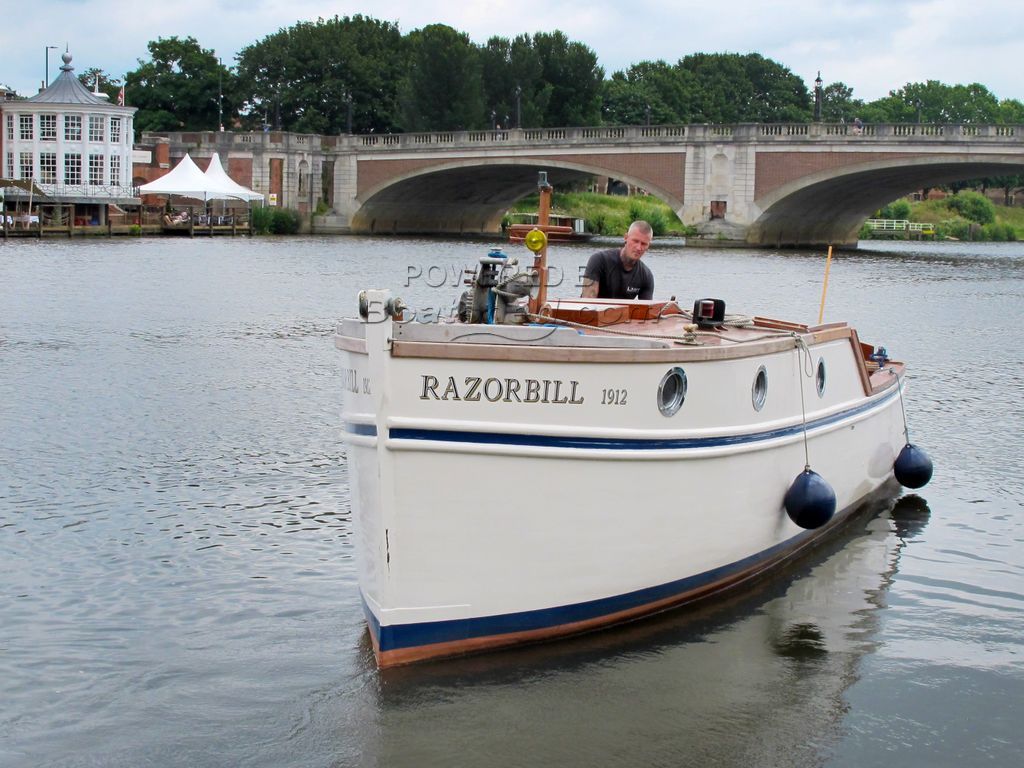
Registered, built 1912 by Thornycroft, J I & Co Ltd, Hampton
Registered, built 1937 by Unknown
Registered, built 1966 by Philip & Sons, Dartmouth